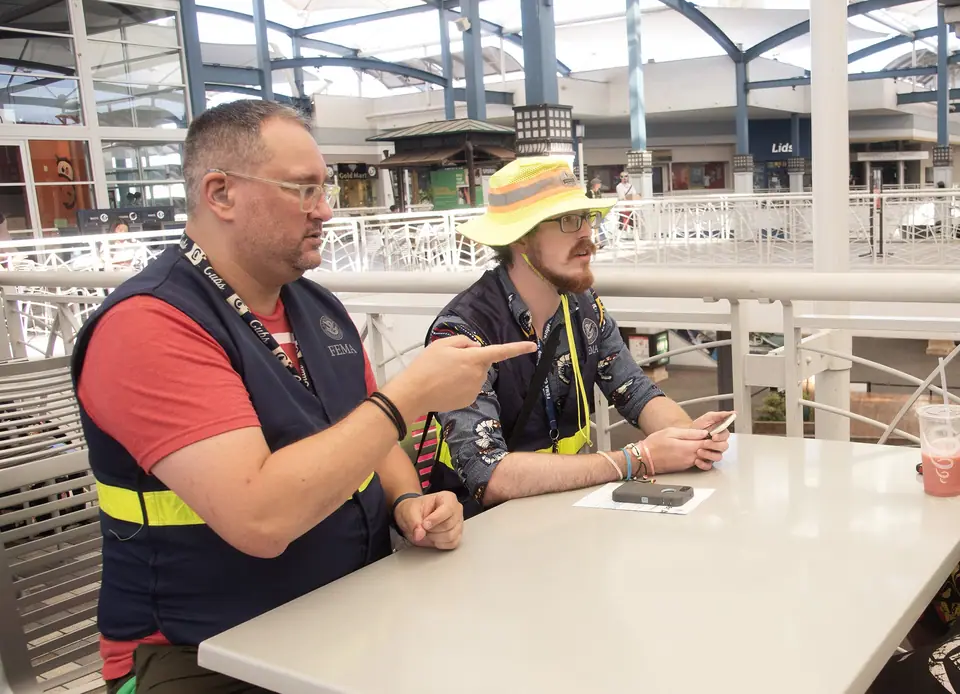
In an imaginary scenario, an isolated community needs to confirm that everyone has reached the meeting point. A short message leaves a phone. Until a reply arrives, the sender must decide whether to rely on it or find another route.
Horizonte 2126 starts with that decision. When the internet goes down, we look for a local connection. Beyond its reach, light and sound are worth testing over short distances. If every medium is unavailable, keeping the message can allow it to move later. The route always depends on equipment, power, time and an identifiable destination.
A route can open briefly
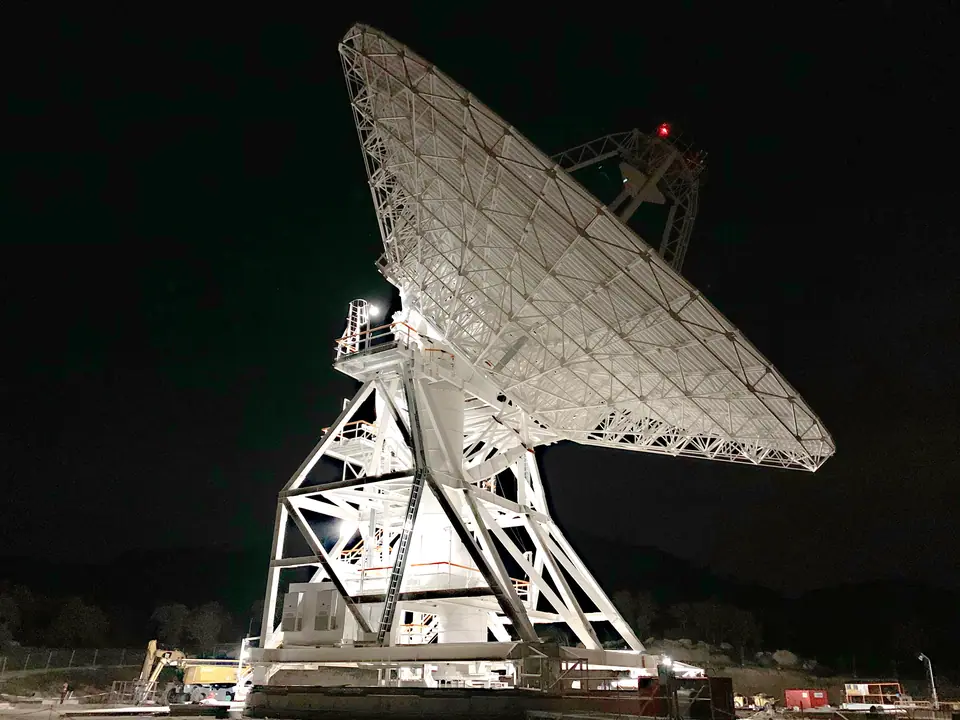
NASA describes delay and disruption tolerant networking for situations where devices are only intermittently in contact. In some designs, a node stores data and attempts to forward it when another contact window opens. A space mission waiting for a satellite pass over a ground station illustrates the principle. On land, opportunities for contact can also be separated by periods of isolation.
In both situations, storing the message buys time to find a route. The value of that time depends on the message size, the capacity of the contact window and how long the information remains relevant.
An acknowledgement has its own route
An interface can show that the request is stored on the phone, that it has been forwarded or that it reached the destination. Saying that a person understood or accepted the information requires an acknowledgement with a different meaning. It usually returns over whatever connection is available, potentially by another route and at a later time.
A design must also account for expiry. Information about who needs transport can go out of date before the network returns. The Bundle Protocol standard includes a lifetime for each unit it carries. Applications still need to define how requests are updated, cancelled and interpreted.
When it is worth changing the medium
A local access point can carry messages within a building. A screen and a camera can communicate when close enough and within view. Sound requires a channel that the microphone can interpret. A wall, a flat battery or too much distance can make a change of medium ineffective.
Comparing data rates, energy use, message survival through disruption and time to acknowledgement shows where an idea can help. A hypothesis can guide the next test. Operational technology also needs evidence of recovery, maintenance and use under real conditions.
The continuity people need
A community needs to understand the message, trust its source and have a way to respond. Resilience therefore includes translation, privacy and an interface that shows whether the request is still on the device. If a contact is restored on a new phone, the app should state what was recovered and what remains inaccessible.
Horizonte 2126 aims to investigate continuity across technologies that may change over generations. Progress means being able to tell which route is available, how long the information remains useful and what evidence shows someone else received it. These questions also help identify when to turn to a procedure that people can carry out independently of the device.
Sources and references
- NASA · Delay/Disruption Tolerant Networking
- IETF · RFC 9171, Bundle Protocol Version 7
- Android Developers · Local networks without internet access
- CICV · Data protection in restoring family links
Sources reviewed on .