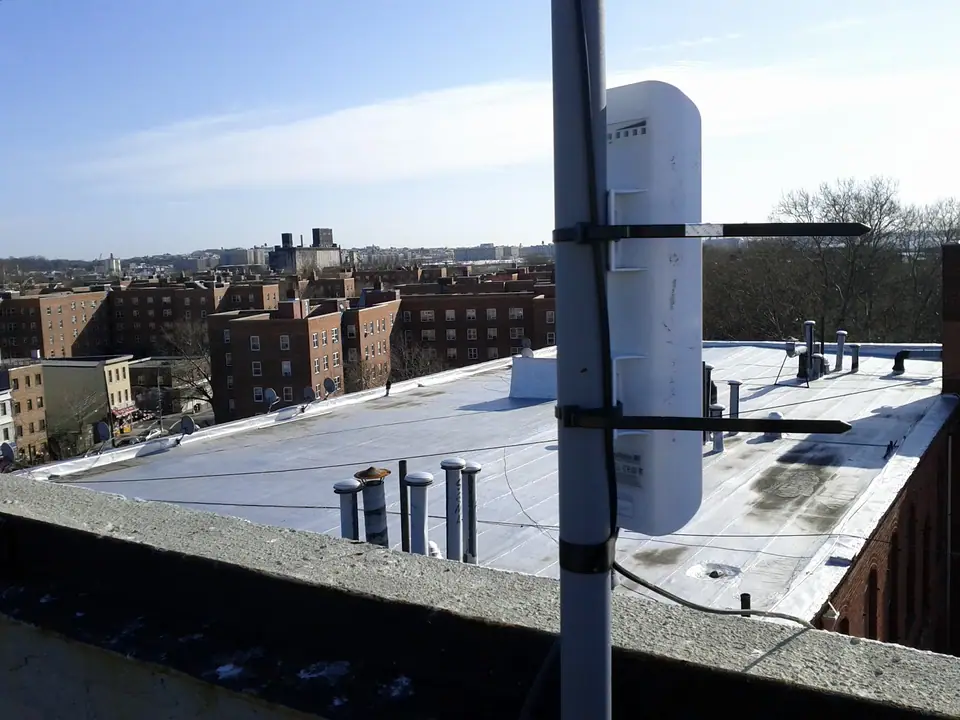
In March 2012, anyone who connected to a new Wi-Fi hotspot near Coffey Park in Brooklyn could open a neighbourhood page and write on a digital noticeboard. The access equipment was connected to a small server. That site did not yet have an internet connection. The page loaded because the request and response could both travel within the Red Hook network.
Seven months later, Sandy flooded parts of the neighbourhood. The Red Hook Initiative community organisation’s headquarters was among the places that kept its electricity supply. It also kept its connection to the outside world. Over the following days, residents used the network to contact family, look for news and find help. The existing network would help extend internet access to the park.
A page that lives in the neighbourhood
Red Hook Initiative is a community organisation. It began developing the network with support from the Open Technology Institute, to communicate with people living near its headquarters. At the experimental site near the park, the server stored the page and its noticeboard. A resident provided access to the roof and power for the equipment. The page relied on nearby hardware, electricity and a usable radio link.
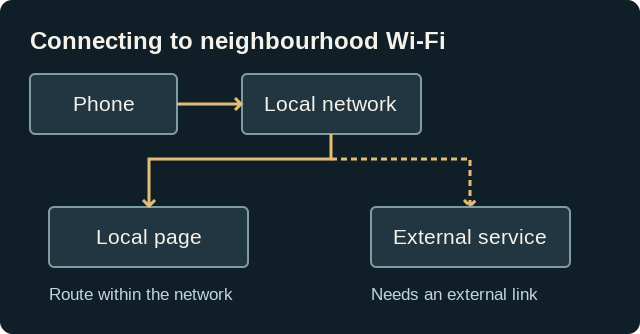
Wi-Fi lets a phone exchange data over radio with an access point. From there, the destination can be inside the network, such as the noticeboard server, or outside it. To reach an external service you need a route that goes all the way to it. A browser can therefore open a local page while a service hosted outside the neighbourhood remains unreachable. A local page may also need a map, a sign-in service or data fetched from elsewhere. Hosting the page nearby only solves the first part of the problem.
A connection for people who needed help
Sandy came ashore in New Jersey on the evening of 29 October 2012 as a post-tropical cyclone. New York State’s climate impacts assessment describes power outages and difficulties getting essential supplies in Red Hook. The organisation’s headquarters became a place to charge phones and get help with applications to the US Federal Emergency Management Agency, FEMA.
The Open Technology Institute reported a peak of about 300 people a day using the network in the first few days. In a later document, the same institute described more than 300 residents in the following days, without specifying that it was using the same daily measure. Both accounts come from project participants. The published methodology is too limited to establish the number of unique residents or how much of the neighbourhood the network covered.
During the response, FEMA provided a temporary satellite connection. The team added another node to the mesh network and routed the connection to Coffey Park, which served as a relief distribution site. Satellite linked the network to the outside world. Phones still used Wi-Fi to join the neighbourhood network.
Keeping each node powered
A mesh network uses links between several nodes to route data. It may offer alternative routes, provided the relevant nodes are powered and there is a path between them. A working local network can keep local applications that are still reachable available. External applications also need a working connection out of the network.
In the next phase of the response, local operator Brooklyn Fiber provided another link to the internet. The team installed radio equipment in a building that still had no mains power. According to the case study, the backup supply kept the routers running for about 12 hours at a time. That was the runtime reported for that equipment. Keeping the service going depended on replacing the power supplies and keeping the other nodes operational.
Information that is useful on either route
Android documentation distinguishes the type of connection, such as Wi-Fi, from verified access to the public internet. A device may show that Wi-Fi is connected even when the internet is unreachable, for example on a network that requires users to sign in. Even with a validated connection, a particular service may still be unavailable. The icon on the screen helps identify the first step. A response from the destination confirms that the route to that service works end to end.
A community support centre can prepare a local noticeboard listing the time of the last update, the services available and the places where devices can be charged. A paper copy can help people whose battery has run flat or who are outside coverage. Before relying on the digital board, it is worth checking that it opens without an external connection and that someone on the team can update it. An alert that needs to leave the neighbourhood requires a different check. Someone at the destination needs to confirm receipt.
In Red Hook, the park’s page was already useful before it had an outside connection. During the storm response, the neighbourhood infrastructure carried an external link to the park. Residents, technicians and institutions worked together to keep it running. That preparation made the equipment useful when it mattered.
Preparing communications for a network outage (in Portuguese)
Sources and references
- Open Technology Institute · The Red Hook Initiative WiFi and Tidepools network, its history and expansion after Sandy
- Open Technology Institute · RISE:NYC proposal, Red Hook WiFi case study, p. 15
- National Hurricane Center · Sandy bulletin, 29 October 2012
- Avaliação de Impactos Climáticos do Estado de Nova Iorque · Sandy case study and the effects in Red Hook
- Controladoria de Nova Iorque · Community infrastructure and the Red Hook response
- IETF · RFC 1918, applications and addressing on private networks
- Android Developers · Network types and internet access validation
- Alyx Baldwin · Installing and repairing nodes near Coffey Park, 11 November 2012
Sources reviewed on .